Brooklyn Drywall Repair With the Scope Set First
Cracked, dented or water-stained walls and ceilings get repaired, new board gets hung and finished, and touch-up paint is blended until you can't pick out the repair. The scope, materials and price are written down for you before work begins. We cover all of Brooklyn and take jobs in Queens and Manhattan too.
Where We Work
We are based in Brooklyn and cover the borough, from brownstones and prewar walk-ups to newer apartment buildings. We also take jobs in Queens, Manhattan and Staten Island, and in parts of New Jersey such as Jersey City and Hoboken.
- Brooklyn
- New York
- Queens
- Manhattan
- Jersey City
- Bayonne
- Hoboken
- Weehawken
- Staten Island
- Newark
- Elizabeth
If you are not sure we reach your building, call and ask. We will tell you plainly.
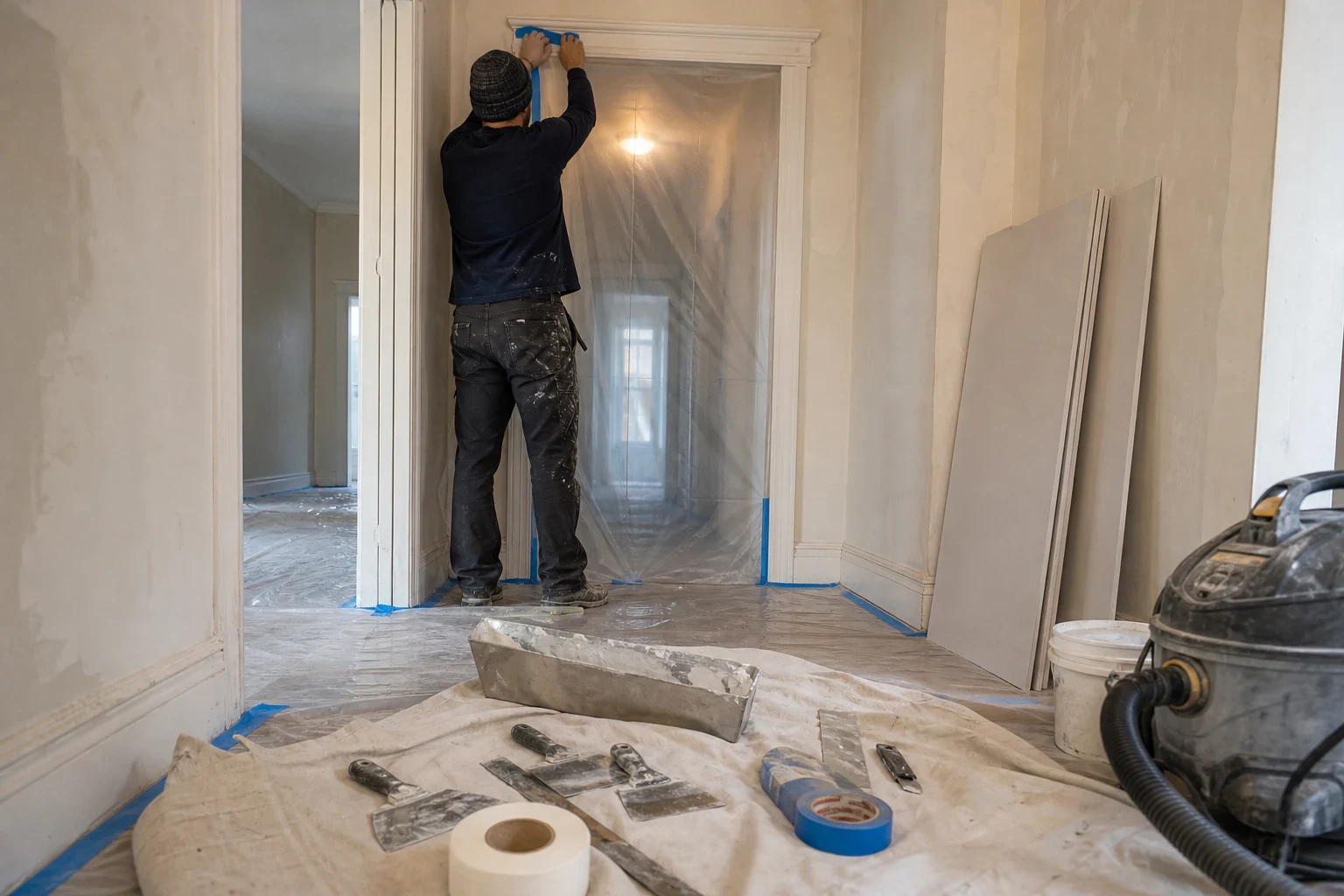
Drywall and Ceiling Work We Handle
A typical call is about a single problem: a hole from a doorknob, a crack above a door frame, a stained ceiling under a leaking unit. Drywall repair and drywall patching cover those, and wall repair and ceiling repair take over when the damage goes past the face paper. When you need new walls or a remodel opening closed, we handle drywall hanging and drywall finishing, from fastening the sheets to the final skim coat. Surface preparation and sanding plus paint touch-ups finish things off so the repaired spot blends into the wall.
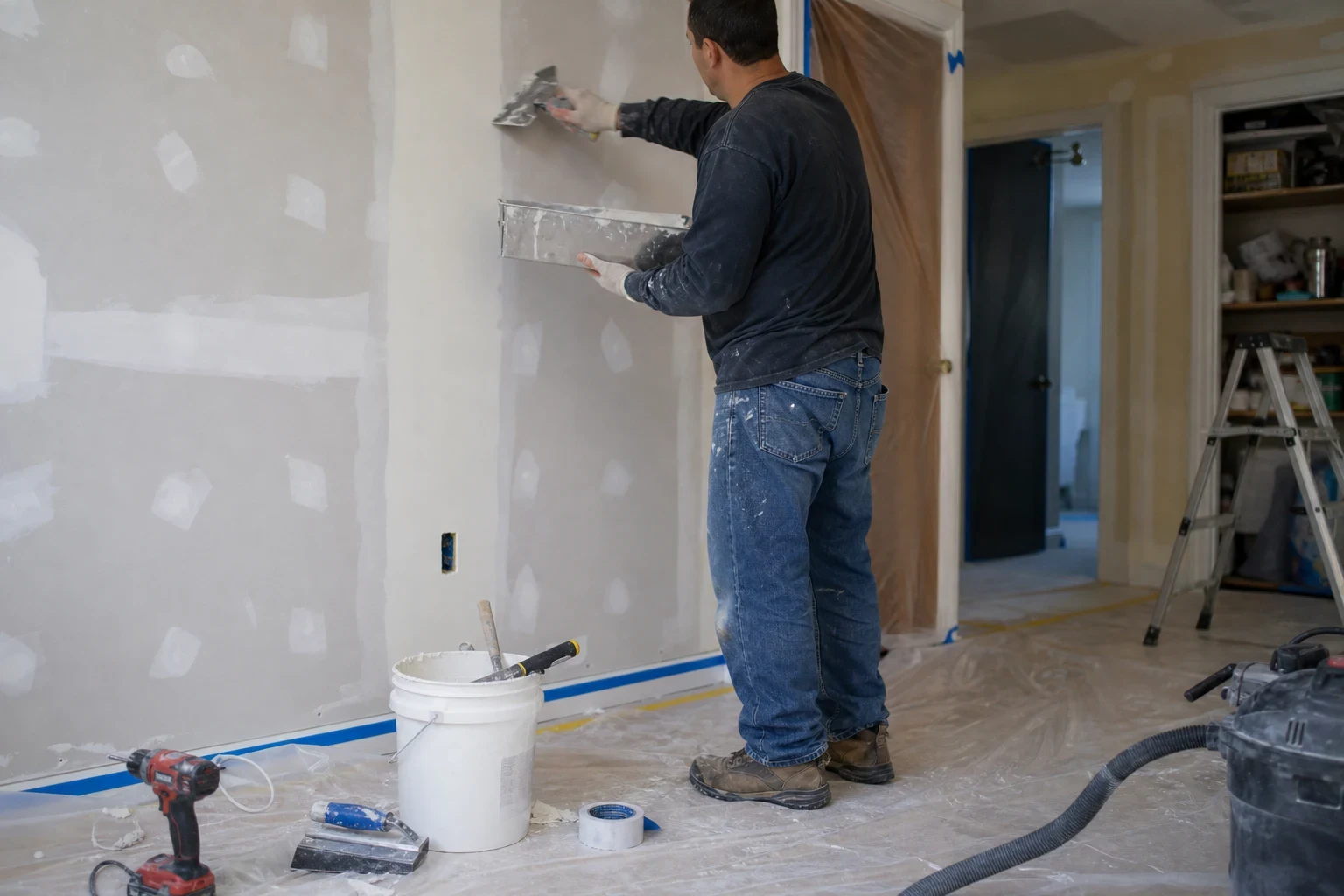
Drywall Repair
We cut out damaged gypsum board, set new pieces on solid backing and finish the seams so the repair disappears under primer and paint.
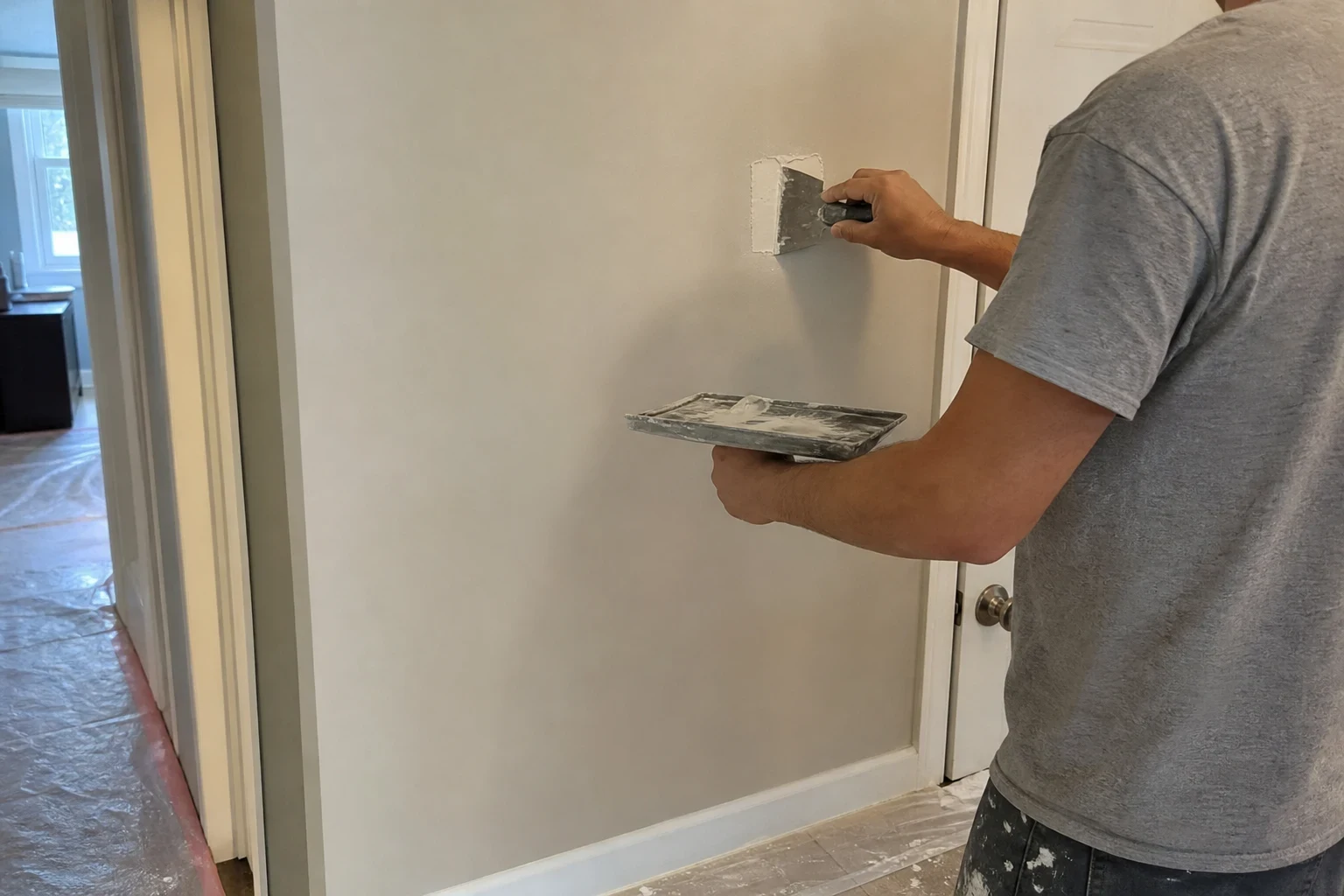
Drywall Patching
Holes from doorknobs, mounts and electrical cut-outs, cut back, backed, taped and feathered flat, with each patch listed in your written estimate.
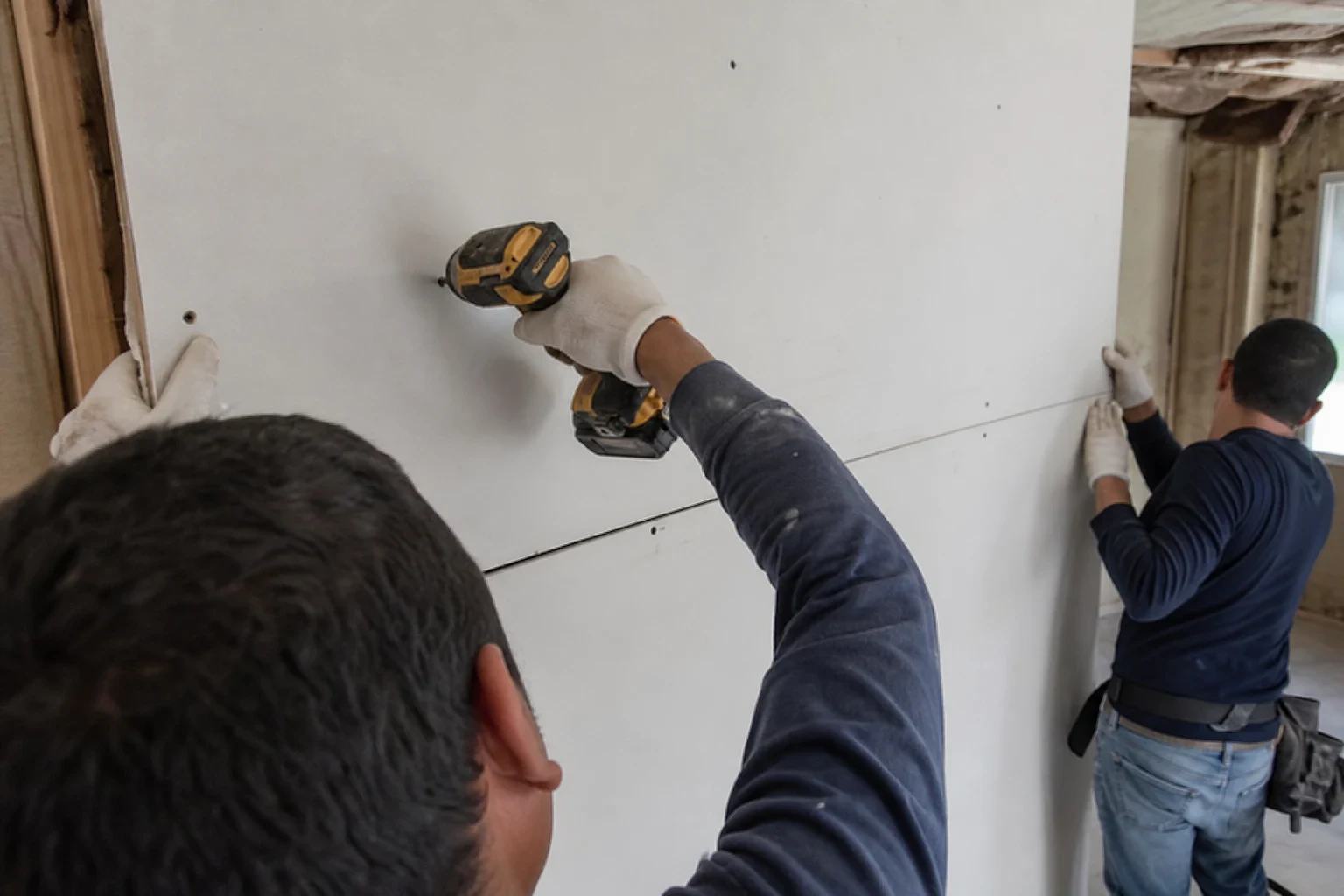
Drywall Hanging
New gypsum board hung on open framing or over failed walls, with board type, square footage and finishing scope spelled out in writing before work starts.
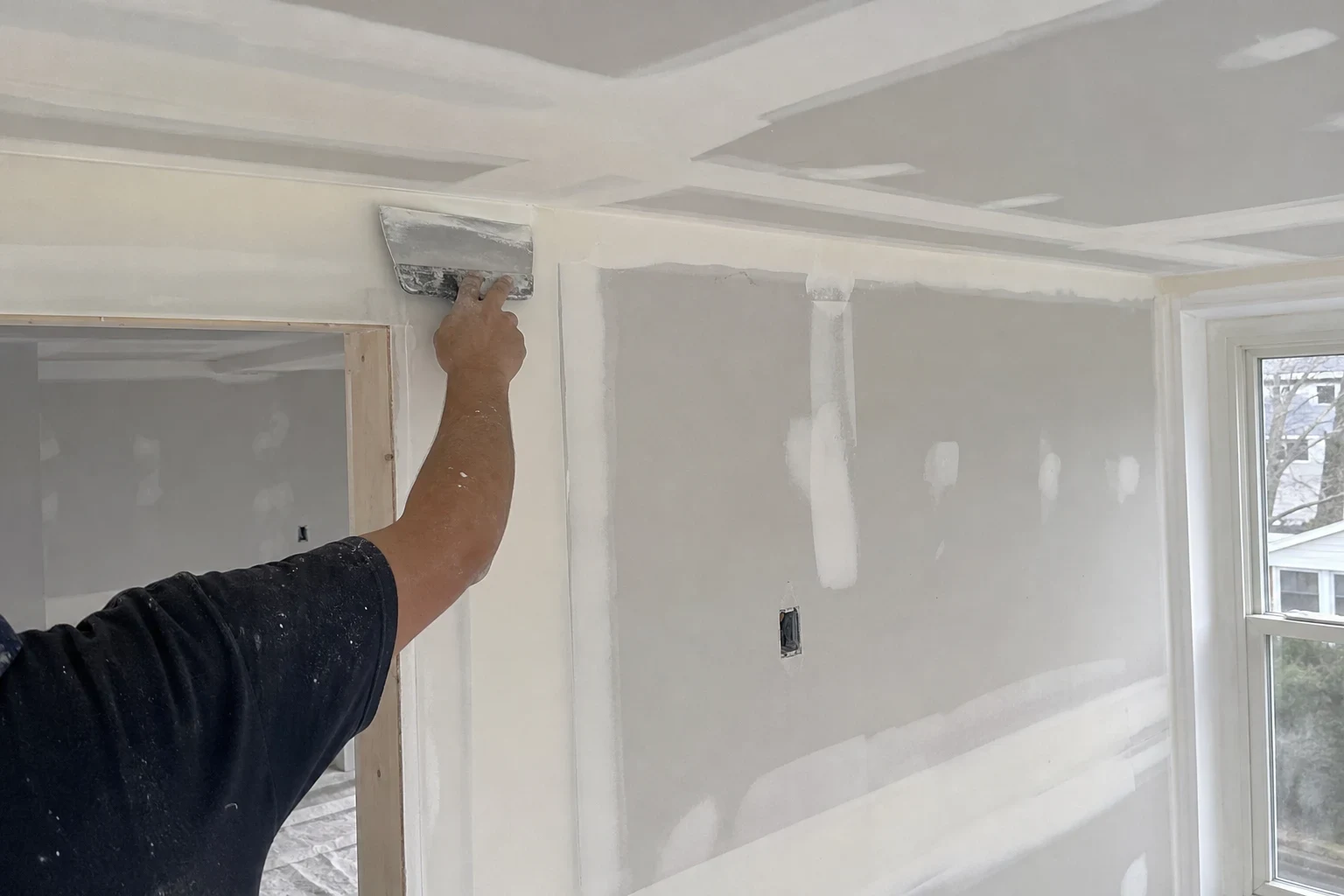
Drywall Finishing
Taping, bedding, skim coats and sanding that turn bare board into a flat, paint-ready surface at the finish level you choose.
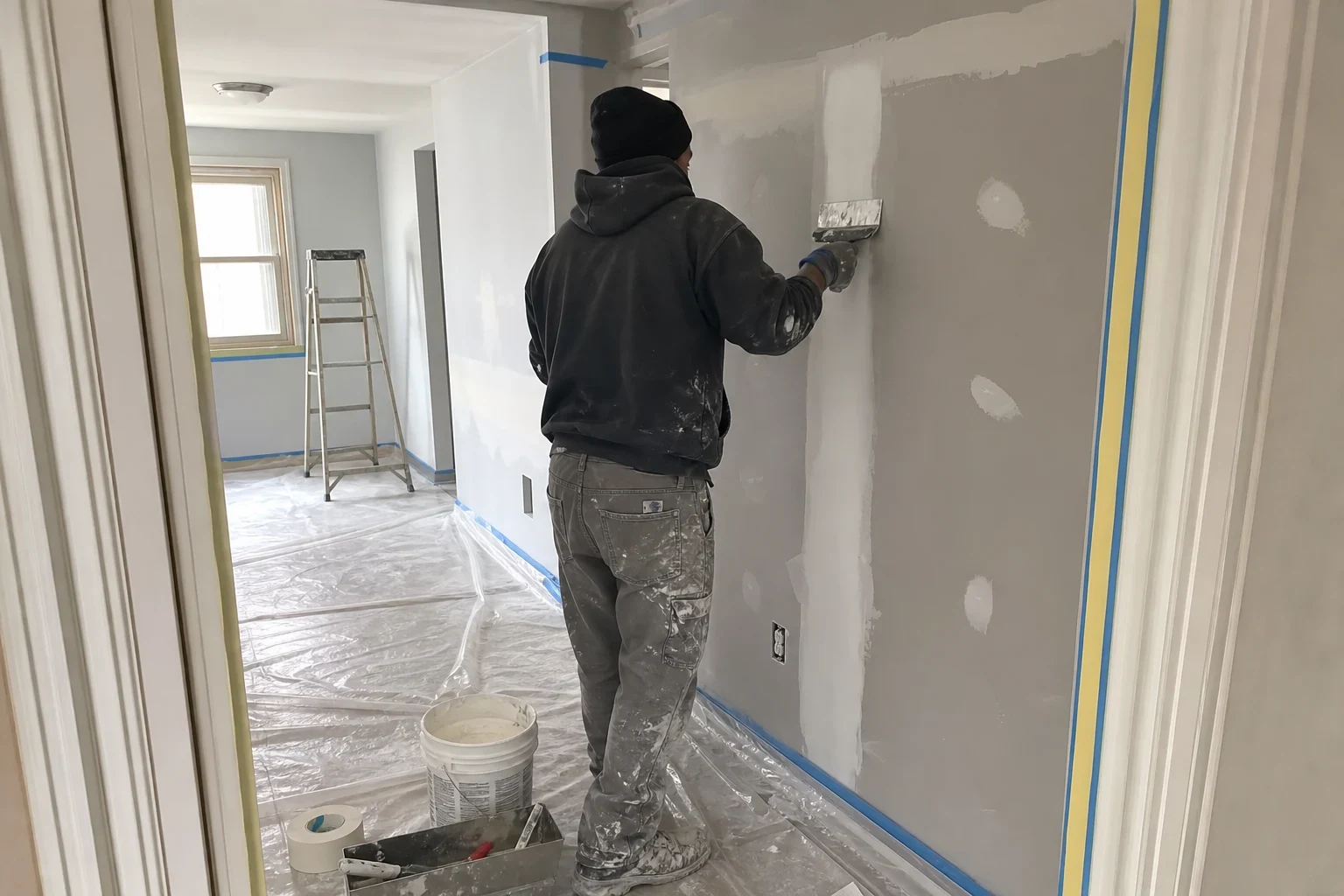
Wall Repair
Cracks, dents, loose corner bead and plaster damage repaired to a flat, ready-to-paint surface, with the scope written down before we start.
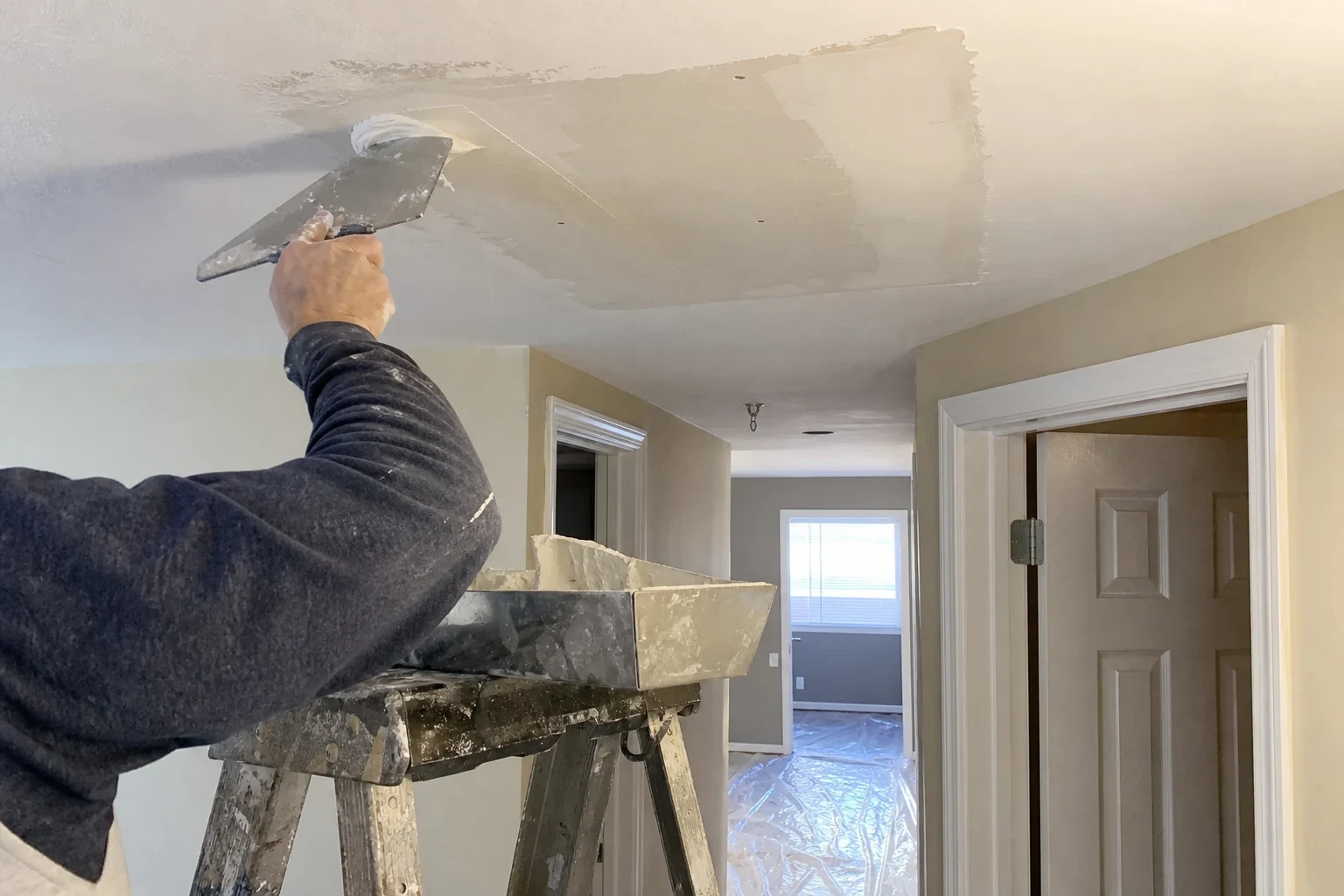
Ceiling Repair
We fix cracked, sagging and water-stained ceilings, match the existing texture and put the scope and price in writing before we start.
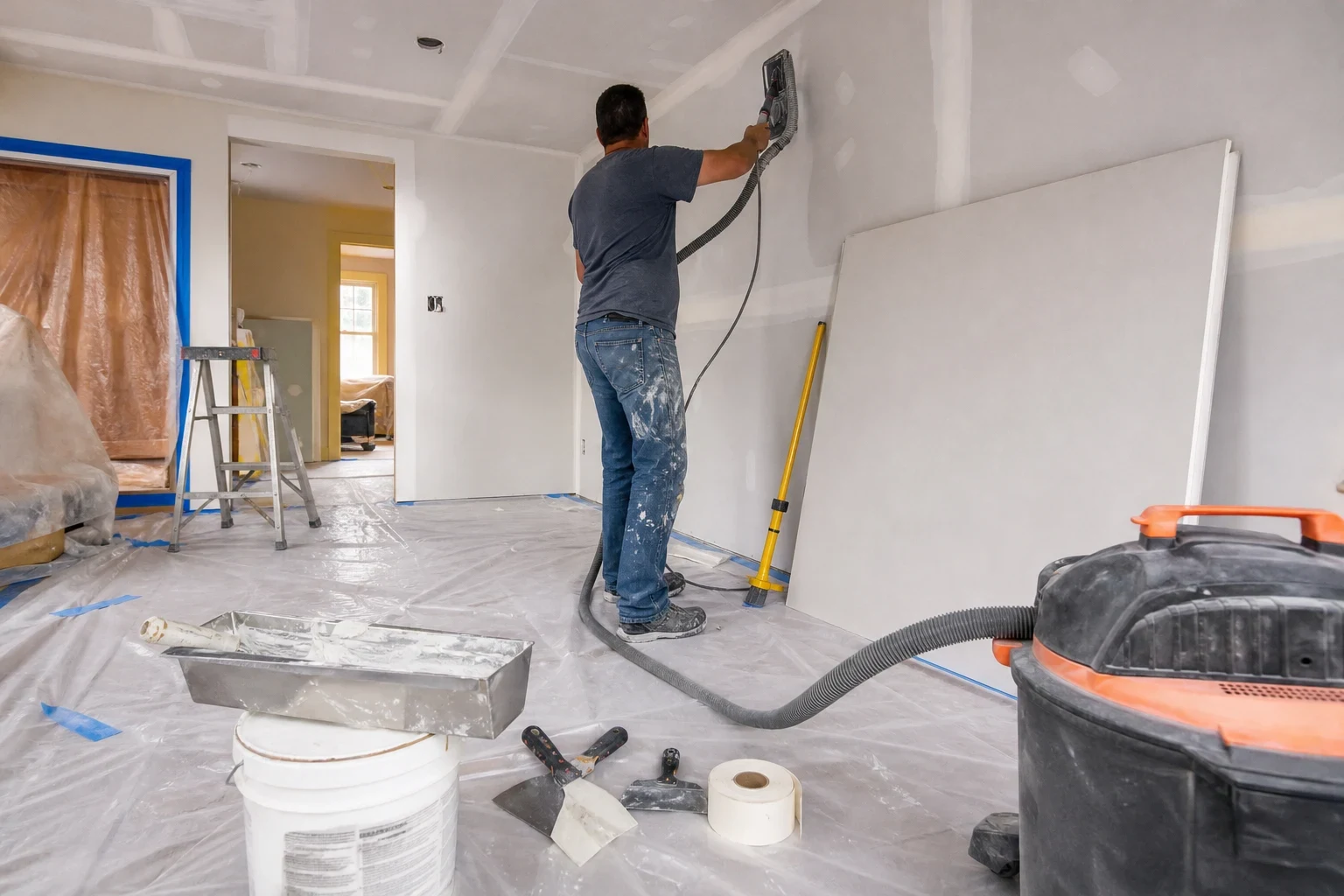
Surface Prep and Sanding
Filling, skim coating, priming and dust-controlled sanding that gets walls and ceilings flat and ready for paint, with every step listed in your written quote.
Paint Touch-Ups
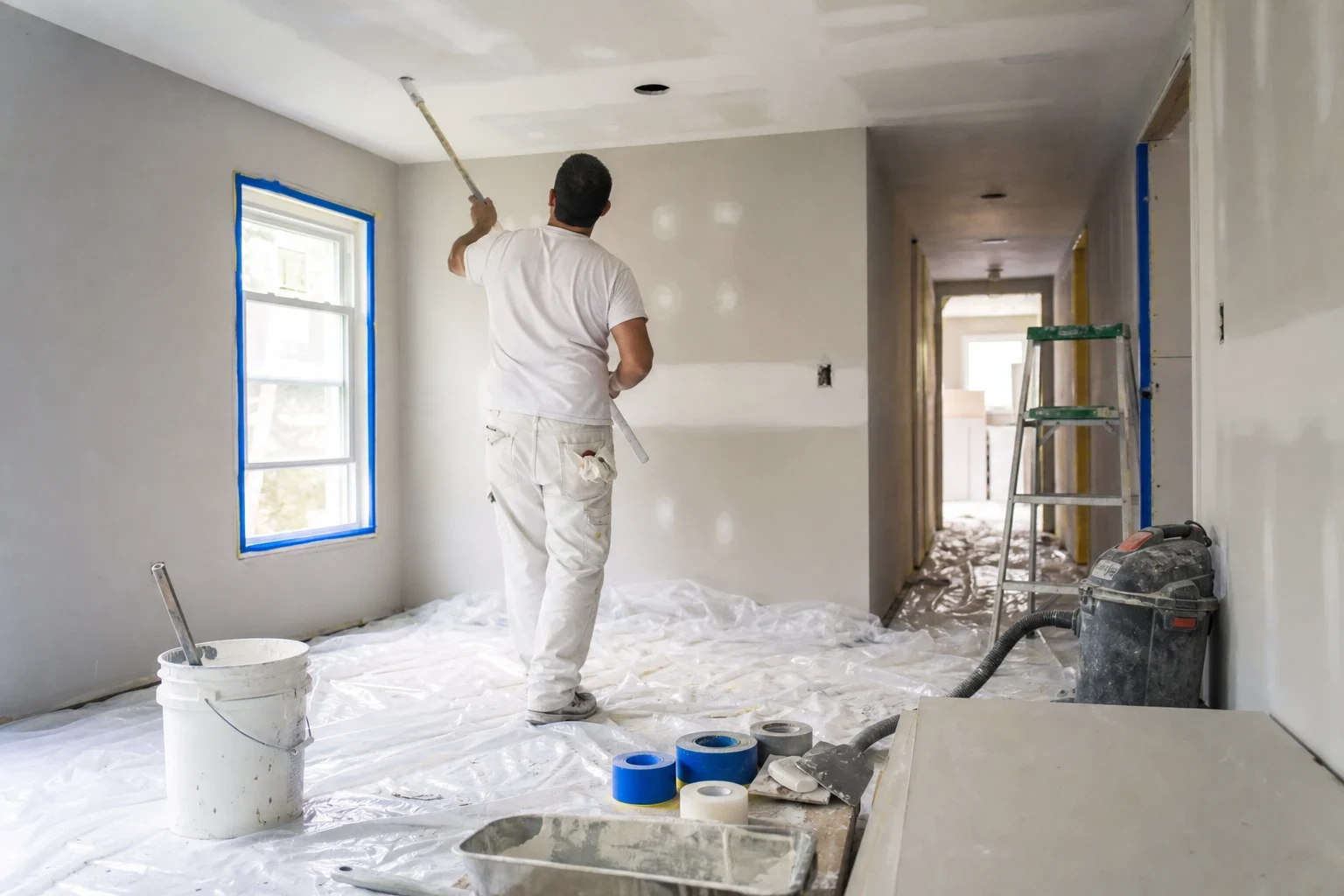
Spot priming and paint touch-ups over patches, scuffs and stains, matched for color and sheen so the repair stops showing.
Paint Prep
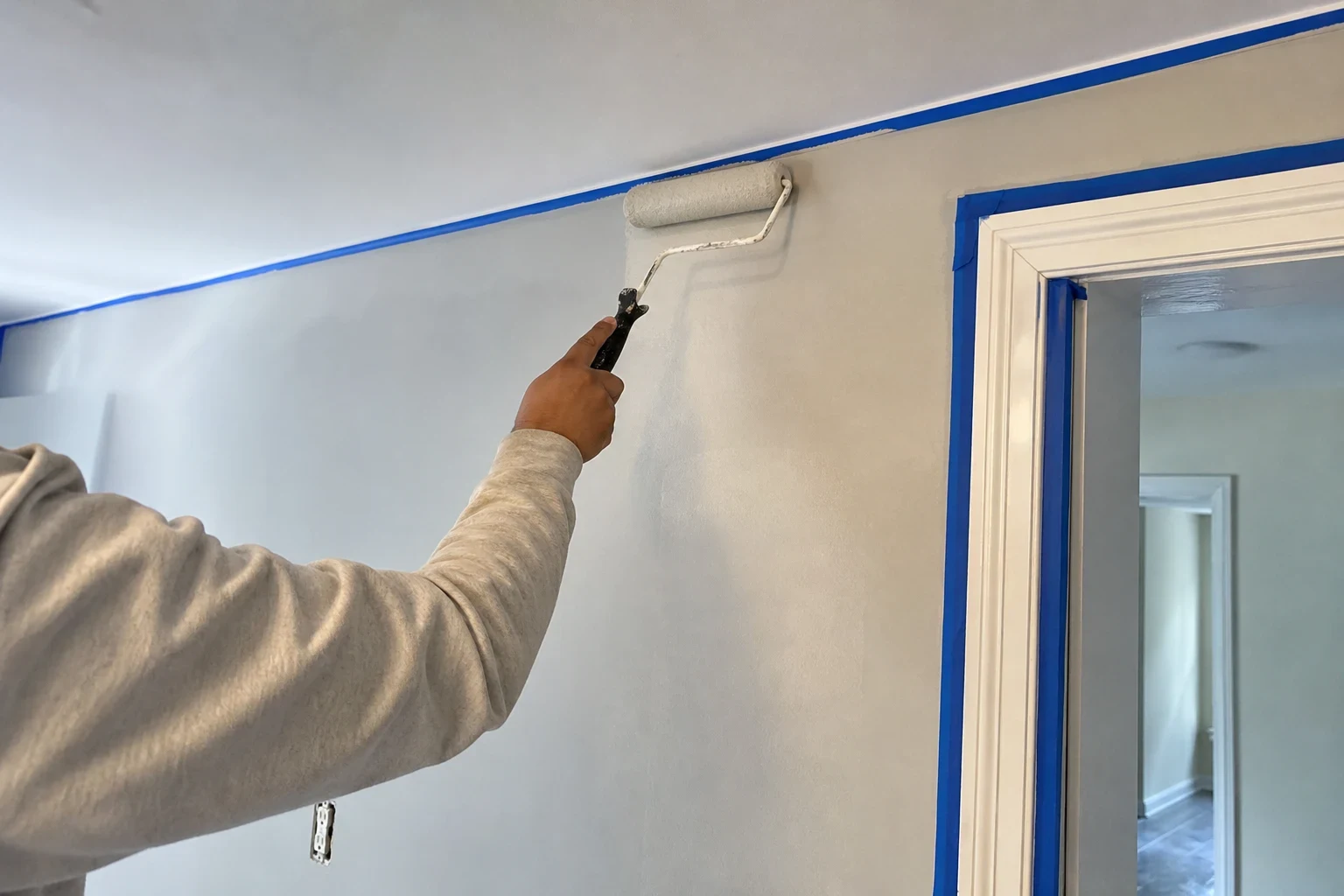
We repair, skim, sand and prime your walls and ceilings so new paint goes on in one even coat, with the scope written out before we start.
What Moves the Price of a Drywall Repair
Two holes the same size can cost different amounts. The price depends on what the board is attached to, how the surface is finished and how easy the spot is to reach. These are the factors we weigh, and each one appears on the estimate you get before work begins.
We look at the damage, then give you an itemized estimate that lists the scope and each pricing factor. The number on that page is the number you pay unless you approve a change in writing.
- Size and number of repairs
- A nail pop or small dent takes compound and a couple of coats. A hole larger than a fist needs a backer or a cut-out back to the studs and a new piece of board, which adds time across several drying cycles.
- What is underneath
- Wet or crumbling gypsum, rusted corner bead or loose tape has to come out before new work goes on. Many prewar buildings have plaster over lath rather than drywall, and bonding new material to old plaster takes different steps.
- Finish level and texture
- A closet wall can take a basic finish. A living room wall under raking window light needs more coats, a skim and careful texture matching to hide the seams.
- Ceilings and height
- Ceiling repair is slower than wall work because compound fights gravity and every pass happens overhead. Tall ceilings mean scaffolding or extra ladder setups.
- Access and building rules
- Furniture to move, a narrow stairwell, elevator reservations or building work hours all affect how a job day runs and how many visits it takes.
- Paint touch-up
- Blending touch-up paint over a repair depends on whether you have the original paint and how much the existing wall has faded.
How We Run a Job
A drywall repair looks simple until someone cuts it open. We write down what we expect to find, what we will do about it and what it costs before we start.
The scope is written, line by line
Your estimate sheet lists each area, the method (patch, cut-out and replace, or skim coat), the number of finish coats and whether sanding and touch-up are included. If it is not on the sheet, it is not on the bill.
We tell you when the cause is behind the wall
A stain that keeps coming back or a crack that reopens usually has a cause: an active leak, a loose stud, a sagging joist. We point it out and note it on the estimate instead of covering it with compound and leaving.
Texture matching, not just flat patches
Older walls often carry a light orange peel, a hand-troweled skim or a sand finish. We match the existing texture before priming so the repair does not catch the light differently from the rest of the wall.
Dust kept where it belongs
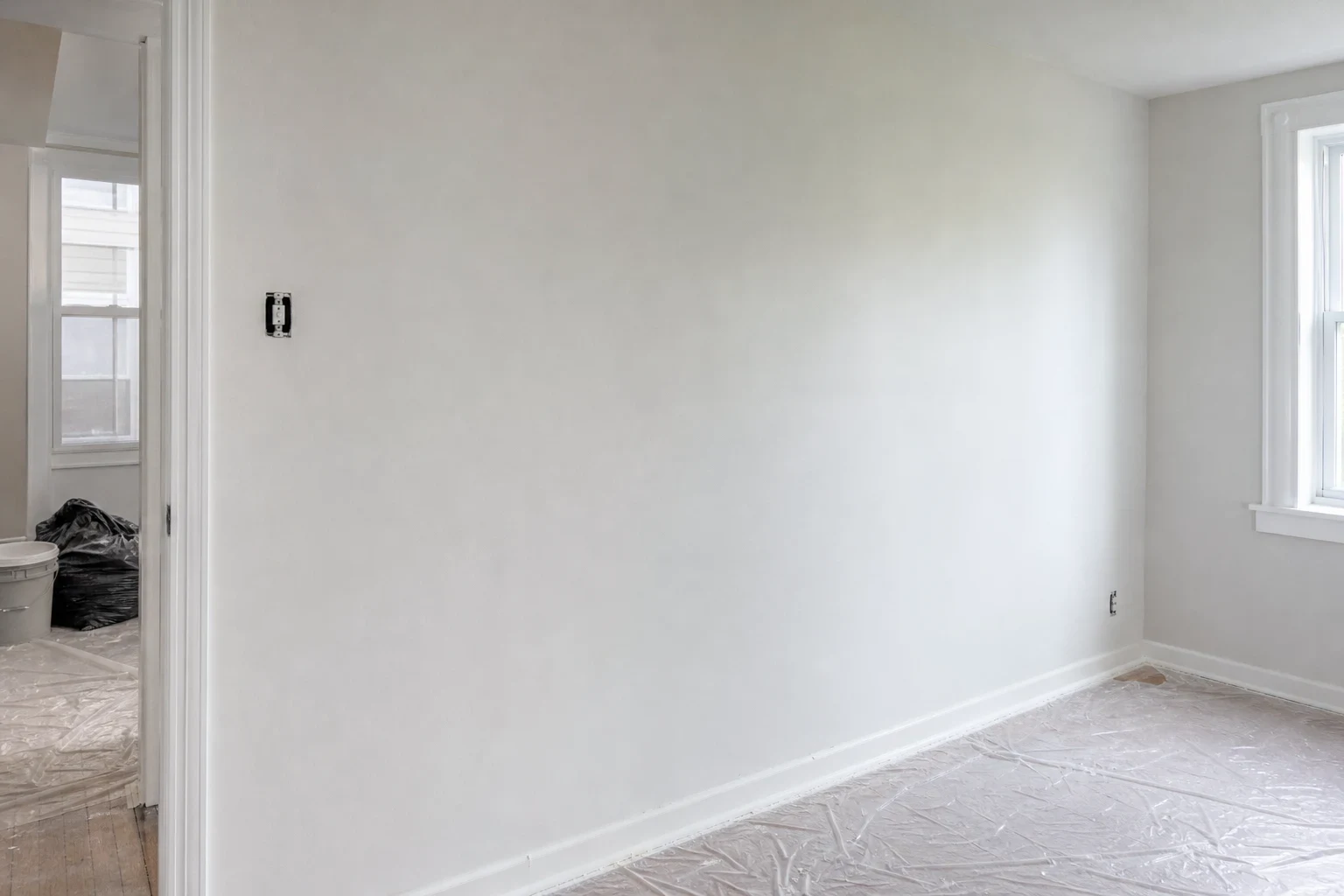
We lay floor protection, tape plastic over doorways and use sanding methods that cut airborne dust. At the end of each day you get a clean work area, not a fine white layer on every shelf.
Changes get approved first
If opening a wall shows more damage than expected, we stop, show you, and write up the added work before doing it. You decide.
Drywall Work, Written Down Before It Starts
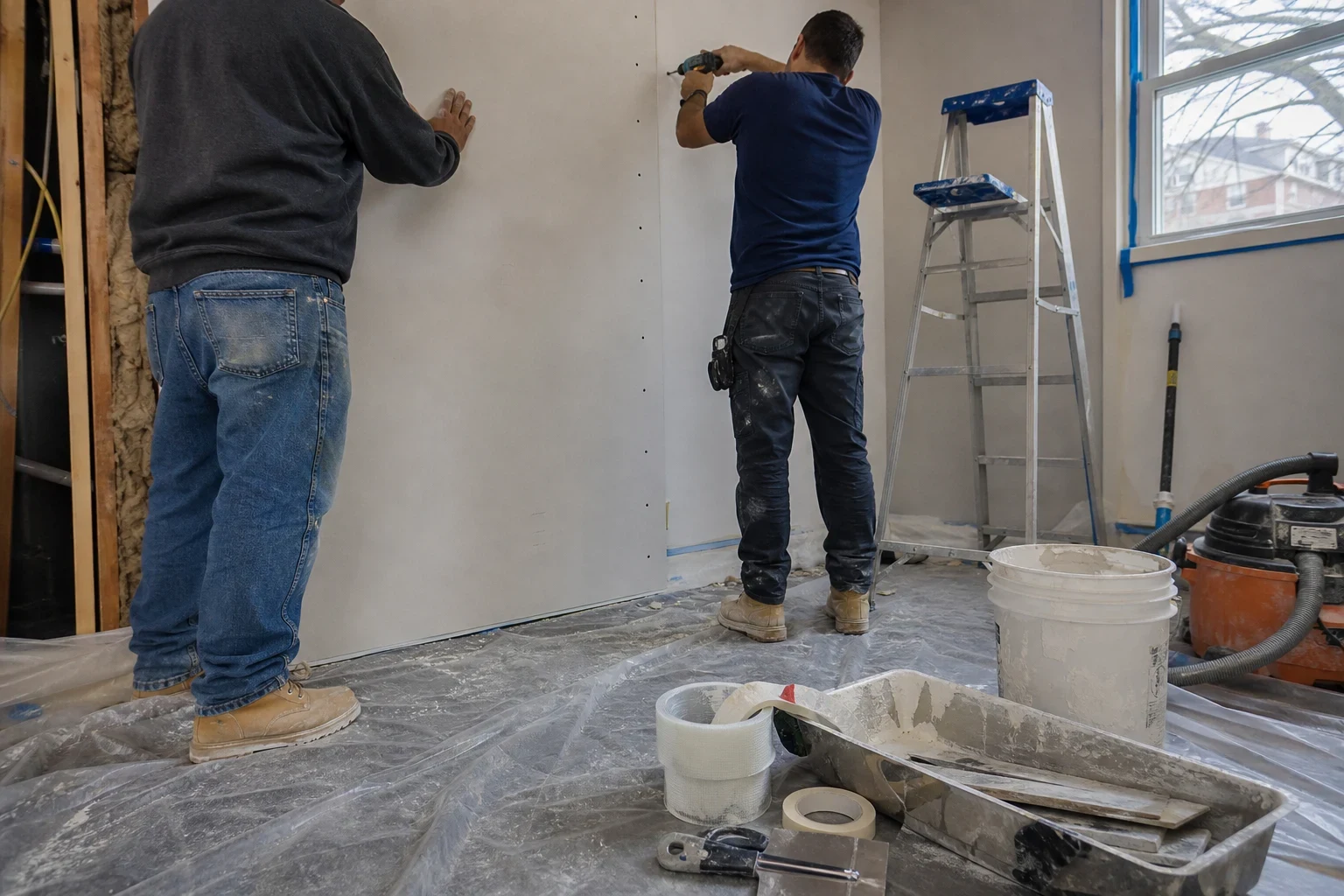
Walls and ceilings are all Drywall Repair Brooklyn works on. Homeowners, landlords and property managers hire us to repair, patch, hang and finish drywall, along with the prep and touch-up work that keeps a repair from showing.
The complaint we hear most is about a bill that kept climbing partway through a job, so we began writing out every scope. With it on paper, you know the method, the coat count and the price before any compound is mixed, and nothing changes until you approve it.
Questions People Ask Before They Call
- Do I see a price before work begins?
- Yes. Once we have seen the damage, we give you a written quote naming each repair, how we will do it and what it costs. If opening the wall turns up something unexpected, we show it to you and write up the extra work. Nothing beyond the quote happens without your approval.
- Will I be able to see the patch once it is painted?
- Patches stand out when the texture or sheen is off, or when the compound went unprimed before painting. We match the texture around the repair, prime it and feather the touch-up paint into the wall. Save any leftover paint from the room for us, because it matches the color most closely.
- How long does a repair usually take?
- Since every coat of compound needs to dry, a small patch can take a day or two. Bigger repairs and ceiling jobs typically run two or three visits. The quote tells you how many visits to expect.
- Will the work make a lot of dust?
- Drywall work always creates some sanding dust, but we contain it. Doorways get taped plastic, floors and nearby furniture get covered, and we clean before leaving every day.
- Can you fix a water stain on my ceiling?
- In most cases, yes, as long as the leak above has been stopped. Firm drywall gets a stain-blocking primer and a touch-up. Board that is soft, sagging or crumbling gets the wet section cut out, replaced and finished to match.
- Do you help with insurance claims?
- We are not adjusters, but we can provide a scope sheet for the repair and photos of the damage we found. Customers often pass those along to their insurer or landlord.
- Will you work in an apartment with tenants living there?
- Yes. Landlords and property managers bring us in for repairs in occupied units. We plan around the tenant and the building's allowed work hours, contain the work area and provide a scope sheet for your records.
What Happens Between Your Call and a Finished Wall
Every coat of joint compound has to dry before the next, which is why most repairs run across more than one visit. Here is how each stage goes.
- 1
Call and describe it
Let us know what went wrong, where it is and about how large. Photos let us prepare, and we book a time to come see it.
- 2
We inspect, then quote in writing
We check the damage, press the surrounding board for soft gypsum or loose tape and track down what caused it. Then you receive a written quote covering scope, materials and price.
- 3
Repair in thin coats
Nearby floors and furniture get covered, the damage is patched or cut out, joints are taped and compound goes on in thin layers. Letting each layer dry first prevents shrinkage and later cracking.
- 4
Sanding, primer, touch-up, cleanup
We sand the area flat, match the texture, prime so the paint absorbs evenly and blend in the touch-up. The plastic comes down and the room is left clean.
Get the Scope on Paper Before Work Starts
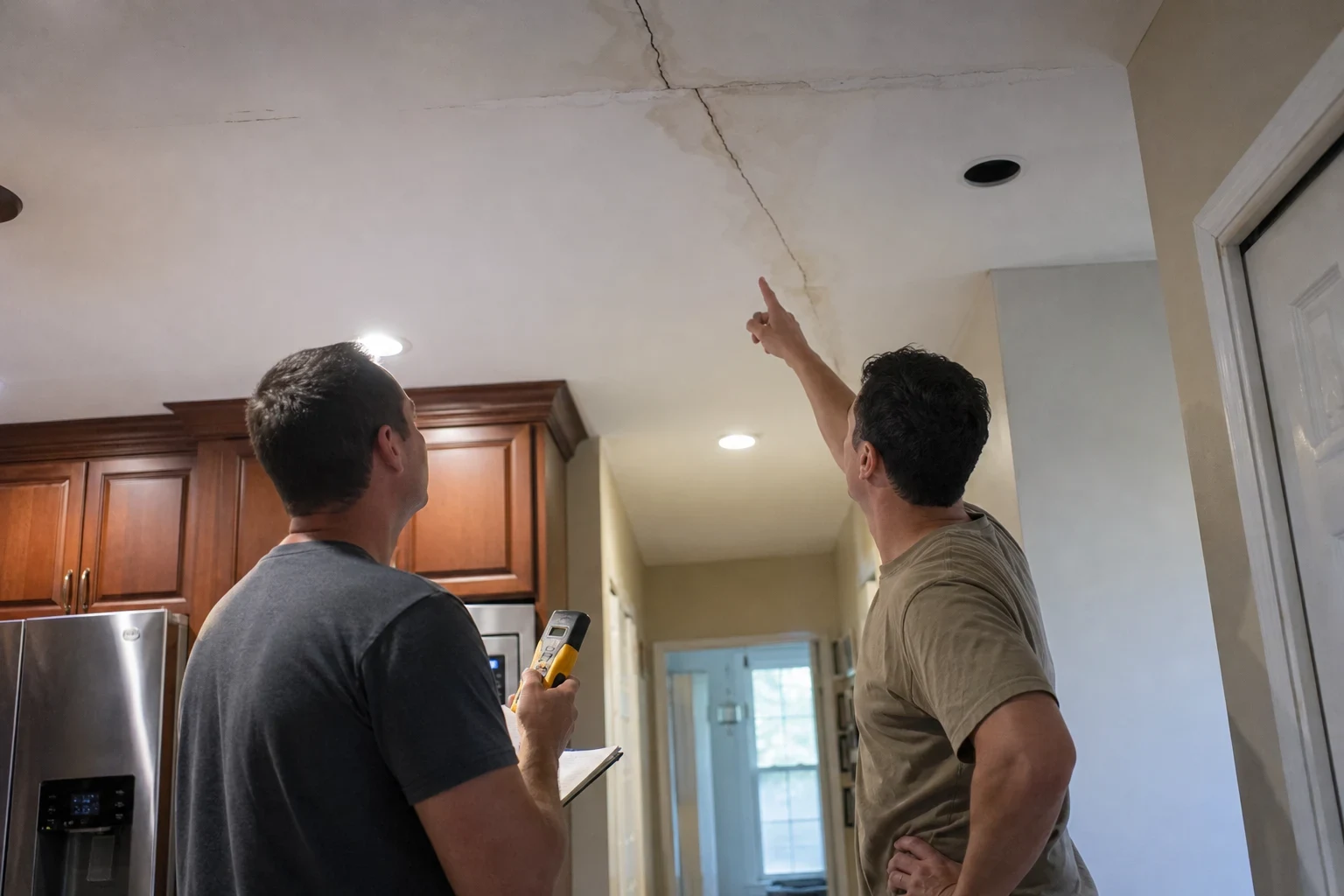
Tell us what is cracked, dented or stained, and we will set a time to look. You get the scope and price before we touch the wall.